The gurgling stomach in a cat is not a trivial noise. Behind these borborygmi lies a far more subtle mechanism. What do these sounds mean? Should you be concerned? Which causes should be considered? And most importantly, when should you consult a veterinarian? This article breaks down every possibility to answer all questions. The goal: to provide a clear, complete, and straightforward overview. No generic information. Only what matters, and nothing else.
Why my cat’s stomach is gurgling
In a cat, stomach gurgling refers to sounds produced by the intestines as gases or liquids move through them. This phenomenon is called intestinal borborygmi. It can occur after a meal, on an empty stomach, or for no apparent reason. In some cases, it is harmless. In others, it is a signal that should be taken seriously.
A cat’s digestive tract is sensitive. It reacts quickly to even the slightest change: a change in diet, stress, the presence of parasites, ingestion of a foreign body. A cat does not express pain the same way a human does. These sounds can therefore be one of the few visible signals of an internal imbalance.
What can make my cat’s stomach gurgle
When a cat’s stomach starts to gurgle, the first reflex is to look at what it has eaten, or whether it skipped a meal. But in reality, the possible causes are far more varied than that. Some are related to diet, others to behavior, emotional state, or underlying health issues. Borborygmi are the symptom of a digestive system in motion, but that movement can be disrupted for many reasons. To better understand, here are the most common situations that can explain why my cat’s stomach is gurgling.
My cat’s stomach gurgles after eating or on an empty stomach
An empty stomach can produce sounds. This is not concerning if the cat behaves normally, eats, plays, and remains alert. It is the natural movement of an active digestive system, even without food.
Conversely, if gurgling appears just after a meal, it may be linked to digestion that is too fast, food that is difficult to digest, or rushed eating.
My cat’s stomach gurgles after a change in kibble
Changing kibble overnight is a classic trigger. A cat’s intestines need time to adapt to a new composition. Transit speeds up, intestinal bacteria reorganize. The result: gas, fermentation, noise. This is common when switching from dry to wet food, or from a low-quality product to a richer one.
To avoid this, introducing a new food should always be done over 7 to 10 days, by gradually mixing the old and the new.
My cat swallows hair or an object: is this the cause of the gurgling?
When a cat grooms excessively, especially during shedding periods, it can swallow a significant amount of hair. This hair accumulates in the stomach, forming a mass called a trichobezoar. It interferes with digestion, slows transit, and causes gurgling sounds.
Another rarer but serious cause is ingestion of a non-digestible object (string, plastic, toy). This creates a partial or even total obstruction, with unusual intestinal noises.
As a preventive measure, certain natural aids promote the elimination of hair accumulated in the digestive system. Wasaby cat depurative cat grass stimulates transit and can limit the formation of trichobezoars, thereby reducing gurgling linked to these internal accumulations.
Purifying Cat Grass for Digestion
Helps eliminate hair and soothes bothersome digestive gurgling.
Gurgling sounds in my cat with diarrhea or constipation
A gurgling stomach rarely comes alone when the issue is digestive. It is often accompanied by abnormal stools. Frequent diarrhea? Persistent loose stools? Or, on the contrary, no bowel movements at all? These signs provide valuable clues.
Acute diarrhea with intense intestinal noises suggests a sudden imbalance: food poisoning, bacterial infection, or parasites. If it lasts more than 48 hours or is accompanied by lethargy or vomiting, a veterinary consultation is necessary.
Constipation, on the other hand, causes slowed transit. But paradoxically, the intestines may produce more sounds as they try to expel what is blocking them.
Digestive parasites: a common cause of a gurgling stomach in cats
Many cats, especially those that go outdoors, pick up internal parasites. Roundworms, hookworms, coccidia all trigger digestive reactions: inflammation, gas, intestinal cramps. Hence the gurgling sounds.
These parasites do not always cause visible diarrhea. Sometimes, unusual stomach noises are the only sign of their presence. An appropriate deworming treatment every 3 to 6 months remains the most reliable way to prevent these internal nuisances.
My stressed cat has a gurgling stomach: what is the connection?
A stressed cat can develop digestive disorders. Moving house, a new arrival, changes in routine—each disruption affects its balance.
Stress interferes with the rhythm of intestinal contractions, creates spasms, and increases fermentation. The result: bloating, gas, and loud gurgling sounds. Some stressed cats stop eating, which further worsens the issue.
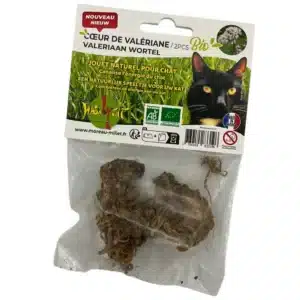
Creating a stable, enriched environment with safe retreat areas significantly reduces these symptoms. For some anxious cats, natural support can also help soothe digestive stress. Organic Valerian Root offers a gentle plant-based alternative, known for its calming effect without dependency. A useful solution for cats prone to intestinal noises during stressful situations.
Organic Valerian Root – Calming for Cats
Naturally soothes digestive stress and helps reduce anxiety-related gurgling.
Unsuitable kibble: a common cause of a rumbling stomach in cats
Not all kibble is created equal. Some low-quality brands contain too many carbohydrates, cereals, and animal by-products that are poorly digested. The intestines become inflamed, the gut flora is disrupted, and rumbling noises appear.
It is recommended to choose a diet rich in animal protein and low in starch, tailored to the cat’s age, weight, and health condition. The presence of prebiotics or gentle fibers helps improve digestive regularity.
My cat is vomiting and its stomach is rumbling: when should I be concerned?
A cat that vomits regularly and has a rumbling stomach does not have healthy digestion. The stomach and intestines are no longer functioning properly. There are several possible causes: chronic inflammation (gastroenteritis), a tumor, pancreatitis, or poisoning.
You should observe the frequency, color, and consistency of the vomit. Yellow? This means bile vomiting on an empty stomach. With hair? Likely a hairball issue. With blood? This is an emergency.
In all cases, repeated vomiting + borborygmi + a change in behavior = immediate veterinary consultation.
My cat has stopped eating and its stomach is rumbling: what it could mean
Refusal to eat combined with a noisy abdomen is a strong warning sign. Cats, which naturally hide pain, stop eating only when discomfort is significant. This may indicate:
Acute gastritis
Intestinal obstruction
Chronic inflammatory disease (IBD)
Kidney or liver failure
Every hour counts in this type of situation. Waiting is not an option.
What veterinary tests are needed if my cat has a rumbling stomach?
When the veterinarian needs to investigate, several tests can help identify the origin of the digestive disorder:
Abdominal palpation to detect masses or painful areas
Fecal analysis to check for parasites or bacteria
Abdominal ultrasound to visualize the intestines
Blood tests if organ failure is suspected
Endoscopy in certain chronic cases
With these tools, a diagnosis can be made quickly and targeted treatment can begin.
My cat’s stomach is rumbling: what can I do at home?
If the cat remains in good general condition, eats, plays, and has normal stools, several simple measures can help:
Offer smaller, more frequent meals
Avoid foods that are too fatty or too rich
Ensure proper hydration, especially in summer or for older cats
Add a small amount of blond psyllium to the diet, with veterinary advice
Brush regularly to limit hair ingestion
Remain vigilant: if the noises last more than 48 hours, if other signs appear, or if the cat’s behavior changes, professional advice is essential.