
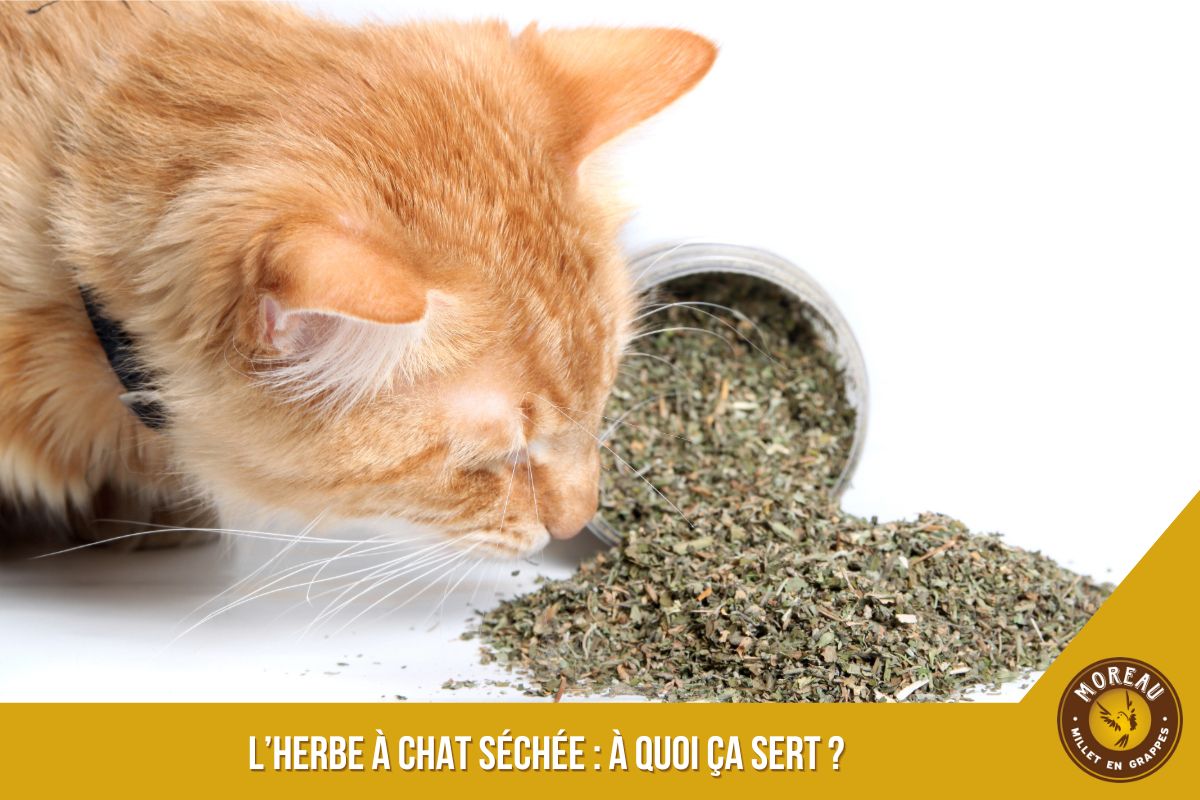
Dried catnip raises many questions among cat owners. Behind this term lie several plants known to trigger intense reactions in cats, particularly Nepeta cataria, also called catnip. Unlike so-called digestive grass, this herb is not meant to be eaten but to be smelled. It causes a rapid and short-lived behavioral change, ranging from euphoria to excitement. The goal of this article is to answer a common question precisely: what is dried catnip used for? To do so, we need to explore its effects, practical uses, and the precautions to be aware of.
How dried catnip acts on a cat’s brain
Nepetalactone, the active molecule in catnip, acts on sensory receptors located in the cat’s nose. It directly stimulates the hypothalamus and the amygdala, triggering a rapid behavioral response. The cat begins rubbing against the scented source, rolling, meowing, or running in a disorganized way. These effects last between 5 and 15 minutes, depending on the individual. After this period, the animal becomes temporarily insensitive to the stimulus for about 30 minutes. No lasting side effects have been observed. The response depends on genetic predisposition. Around 70 to 80% of cats react to it, starting from 3 to 6 months of age.
Stimulating a cat’s physical activity with dried catnip
Dried catnip helps encourage movement behaviors in indoor cats. These felines, often sedentary, lack stimulation. By sprinkling a small amount on a toy, a mat, a cat tree, or a tunnel, you trigger dynamic play sequences. A study published in the Journal of Feline Medicine and Surgery showed that regularly introducing catnip into the environment reduced inactivity time by 35%. These phases of excitement provide a physical outlet without constraint. Used two or three times a week, catnip helps vary stimulation while maintaining the cat’s interest in its usual accessories.
Reducing cat stress with the help of dried catnip
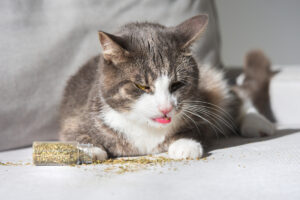
Dried catnip can be useful in stressful situations: the arrival of a new animal, moving house, veterinary care, or unusual noises. The euphoric effect followed by a calm phase creates a sequence that interrupts the anxiety cycle. According to a study conducted in Helsinki in a cat shelter, using catnip in the reception area reduced the hiding time by 40% for newly adopted cats. It does not replace gradual adaptation or a secure environment, but it can speed up relaxation. Applied to a fabric or a neutral object, it promotes exploratory behavior even in unfamiliar settings.
Differences between dried catnip and potted digestive grass
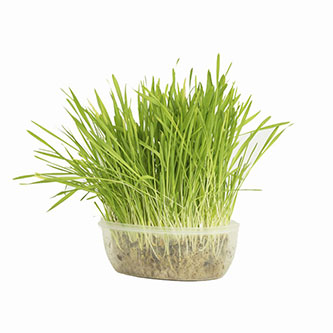
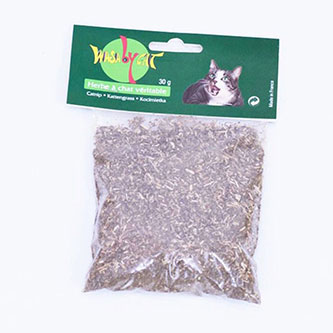
Many people confuse dried catnip with the grass sold in pots for cats. The latter is usually made of wheat, oats, or barley, and is eaten by cats to help expel ingested hair. It has a digestive function. By contrast, dried catnip is not intended to be eaten. Its role is purely olfactory. It releases volatile compounds that stimulate nasal receptors. This distinction is often unclear on packaging. To avoid confusion, look for the terms Nepeta cataria, valerian, or actinidia in the composition. These plants are the only ones capable of triggering a neurological response.
Not all cats react to dried catnip
Not all cats react to dried catnip. Sensitivity is hereditary. 20 to 30% of cats are completely insensitive to it. This insensitivity does not change with age. In addition, very young kittens are not yet receptive. It is necessary to wait for the activation of certain neurological circuits, between 3 and 6 months. Some older cats show a decrease in responsiveness, although this is not systematic. Before integrating catnip into a stimulation strategy, it is important to check the cat’s reaction with brief exposure. If no response appears after two or three spaced attempts, the animal is probably not a responder.
Recommended quantity and frequency of use for dried catnip
The ideal dose of dried catnip is modest. A pinch of 0.5 to 1 gram is enough for one object. Beyond that, the cat will not gain any additional benefit. Too frequent exposure leads to a temporary loss of effect due to desensitization of the olfactory receptors. It is recommended to limit use to 2 or 3 times per week, with rest days between sessions. Cats often regulate their own exposure. They move away from the object when they are no longer receptive. This self-regulation naturally limits overuse. By alternating application areas and objects, curiosity and effectiveness of the stimulus are maintained.
Using dried catnip to redirect scratching behavior to a scratching post
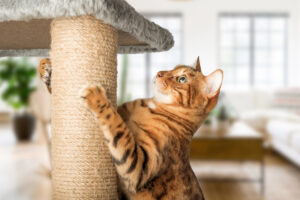
Some cats prefer to scratch sofas, curtains, or rugs. Dried catnip helps redirect this behavior toward appropriate supports. By sprinkling a scratching post or using a spray on a sisal post, the owner makes the object more attractive. This method reinforces claw marking where it is allowed. Manufacturers sometimes offer scratching posts with compartments designed to hold a catnip capsule. This setup works best with low, horizontal, or inclined supports. The combination of an olfactory stimulus and a satisfying surface helps anchor the habit. Cats naturally return to the scented spot, even several hours after application.
Enriching the cat’s indoor environment with dried catnip
The cat’s environment directly influences its balance. Adding sensory stimuli improves adaptation, especially in apartments. Catnip is one of the recommended tools for diversifying experiences. In addition to platforms, hiding spots, and scratching posts, it introduces a powerful olfactory variation. The International Society of Feline Medicine recommends its occasional use in enrichment strategies. It is not enough on its own to keep a cat active, but it can temporarily stimulate mental and physical activity. Catnip can be combined with other scents such as valerian, mint, lavender, or actinidia to create alternating sensations. This variety limits repetitive behaviors and improves resilience.
Enhancing interactive play with dried catnip
Dried catnip increases a cat’s interest in interactive play. By sprinkling it on a ball, a hanging plush toy, or a wand toy, the owner encourages the animal to chase the object for longer. A study from the University of Guelph showed that the use of catnip increased the duration of human-cat play sessions by 58%. Catnip stimulates the predatory instinct, making toy movements more attractive. This method is particularly suitable for less playful cats or those that become bored quickly. It also helps establish a playful routine in households where interaction time is limited.
Reducing tension between multiple cats with dried catnip
Living with multiple cats can create tension. Dried catnip helps divert attention toward individual objects. Each cat receives a toy or cushion infused with catnip, placed at a distance from the others. This strategy reduces conflict rates by 20 to 40%, according to the Montreal SPCA, when combined with a structured environment. The goal is not to harmonize relationships, but to introduce a diversion. Each animal engages in a solitary activity, reducing confrontations. This method works best when cats already have access to separate areas and are not competing for essential resources such as water, litter boxes, or food.
Making transport and care easier with dried catnip
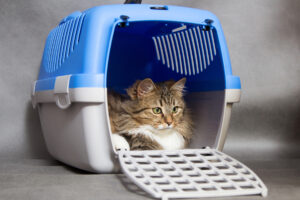
Transport to the veterinarian or the administration of care can be major sources of stress. Dried catnip, placed in the carrier or on a cloth, can reduce vocalization, scratching, and escape attempts. The Royal Veterinary College recommends this approach for short procedures or scheduled visits. Catnip acts as a positive signal, especially if it has previously been used in a pleasant context. It should be applied 10 to 15 minutes before the event, then removed once the cat is settled. This technique works best if the cat has already been exposed to the plant in a calm environment.
Helping with cat training using dried catnip as reinforcement
Dried catnip can be used as a non-food reward in a learning process. When a desired behavior is observed (entering a carrier, climbing a tree, wearing a harness), the owner can offer an infused toy. The scent triggers a pleasurable response, reinforcing the positive association. This method works through repetition. Within 3 to 6 spaced exposures, the cat associates the action with a pleasant sensation. It complements the use of treats and helps vary rewards. It remains ineffective if the cat does not respond to catnip. In that case, other sensory reinforcements should be used (soft voice, petting, objects).
Properly storing dried catnip to preserve its effectiveness
The freshness of dried catnip determines its effectiveness. When stored in an airtight container, away from light and humidity, it retains its properties for 8 to 12 months. Prolonged exposure to open air reduces the intensity of the scent. Some products indicate the nepeta-lactone content, typically between 0.5% and 1%. Beyond this period, it is advisable to renew the stock. Storage in a metal or glass container helps extend shelf life. A quality product releases a strong scent upon opening, without excessive dust or overly thick stems.


