

Why a cat meows at night: all the common causes
A cat never meows without reason. At night, these reasons can be numerous and varied. The first thing to do is to consider the entirety of its behavior, both day and night, to better understand what prompts it to vocalize. Many cats are more active at dusk and before dawn. Their natural rhythm, called crepuscular, makes them more alert at these times. So it is no coincidence that they choose this moment to make their voices heard. For some young or very active cats, the night may be perceived as an extension of the playground. Their day hasn’t exhausted all their energy. Other cats meow at night because they are bored. A cat left alone all day may seek companionship as soon as it senses you are available, that is to say, at bedtime. It solicits you, calls you. Its meows convey a need for interaction, not necessarily for food or care. Finally, certain medical reasons should not be ruled out. Pain, urinary discomfort, cognitive disorders in older cats, or hormonal issues can also explain these meows. In these cases, nocturnal meowing becomes a warning signal.When a cat that meows at night hides a health problem

What to do when a cat meows at night: simple and effective methods
Your cat is keeping you awake? Simple gestures can already make a real difference. Before looking for a medicinal or radical solution, start by observing the triggers. What time does it start to meow? Is it regular? Is it always after a particular event like bedtime, turning off the lights, or the end of a meal? Make sure its basic needs are met before you go to sleep. Full food bowl, clean litter, cozy and quiet corner, accessible toys… Sometimes, a simple oversight triggers a long night of meowing. Next, encourage daytime activities, especially in the late afternoon. Playing, running, jumping, chasing a ball: everything that can tire them will help them sleep through the night. A cardboard scratcher enriched with catnip, like the one offered by Wasabycat, can also encourage them to expend energy naturally without stimulating their excitement, making it easier to calm down in the evening.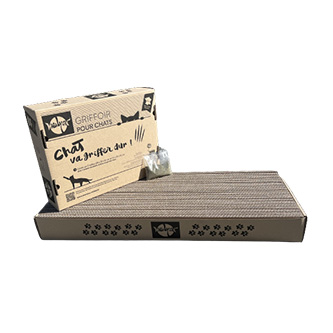

Can age and breed explain why a cat meows at night?
The age of the cat has a direct impact on its nighttime meowing. A kitten separated too early from its mother, or a senior cat suffering from cognitive issues, can both meow at night – but for very different reasons. A young cat, especially between 2 and 6 months, seeks contact. He is discovering the world, often afraid of the dark, and asks for attention as he would from his mother. This meowing generally fades with age, provided it is not reinforced by maladaptive reactions. In older cats, meowing can become a chronic symptom. Disorientation, anxiety, decreased vision or hearing, joint pain… An older cat may wake up in the middle of the night, believe it is alone, and express its discomfort vocally. These cats need calm, visual and olfactory reference points, sometimes specific treatments for age-related issues. Concernant la race, certains chats sont plus bavards que d’autres. Le Siamois, le Bengal ou l’Abyssin sont connus pour être expressifs, souvent bruyants, parfois la nuit. Cela ne veut pas dire qu’ils ont un problème, simplement qu’ils s’expriment plus naturellement avec leur voix. D’autres, comme le Chartreux ou le British Shorthair, ont un comportement plus silencieux, et un miaulement nocturne chez eux doit plus souvent être interprété comme un signal d’alerte. L’important est de bien connaître votre compagnon. Son comportement de base est votre point de comparaison. Ce n’est pas une question de standard, mais de repère personnel.How routine can reduce your cat’s nighttime meowing

Establish a simple but solid routine. Meals at fixed times, an interactive play session in the evening, a bedtime ritual (gentle petting, a soft word, dim lighting). It may seem trivial, but for your cat, this creates a framework that secures their circadian rhythm.
A cat that doesn’t understand why the house suddenly goes dark, or that senses tension in the air, may meow to seek answers. They don’t need a rigid structure, but they do need reference points. The more predictable your behavior is, the more secure they will feel. This foundation naturally reduces unnecessary vocalizations.
And if your cat is very active, don’t hesitate to shift playtime to the evening rather than during the day. This helps them burn off energy before bedtime, much like with a restless child. Sleep is not an automatic reflex in cats; it is a state they learn to regulate. You play a direct role in that learning process.
Can letting your cat sleep with you calm nighttime meowing?
This is a question many people ask. And there is no absolute answer.
Some cats sleep perfectly at the foot of the bed, calm and unobtrusive. Others take advantage of this closeness to demand more attention or to play, even in the middle of the night. If your cat meows behind the door, it is often because they refuse to be excluded from the group. For them, exclusion can generate stress, which fuels the meowing.
You can test it. Let them have access to the bedroom for a few nights, with clear rules. No play, no food. Just your presence. If they calm down, it shows their meowing came from a need for reassurance. If it continues, then separation is not the issue.
Conversely, if you already sleep with your cat and the meowing persists, consider a temporary separation. Some cats sleep better alone, especially if they are restless. In all cases, the goal is to identify the strategy that guarantees more peaceful nights for both of you.
What to do tonight if your cat meows at night?
No need to wait to take action. Here is a mini action plan you can apply starting today:
- 15 minutes of active play with a fishing-rod-style toy or a bouncing ball before bedtime
- A light meal before turning off the lights
- A comfortable sleeping area: cushion, blanket with their scent, scratching post nearby
- A soft light, night light, or indirect lighting to prevent them from feeling disoriented
- Ignore the meowing during the first nights of the new routine, unless behavior seems abnormal
If you stick to this routine for several days, you will see results. Consistency always pays off with cats.


